The dust hadn’t settled in three days. Kai crouched behind a rusted truck frame, counting the clicks of a corrupted drone overhead. In Once Human, every decision carried weight — a misplaced footstep could bring a swarm of deviants, and a poorly chosen upgrade path meant watching your hard-fought base crumble. Gear was everything. Yet scavenging alone could only take a survivor so far. That was when an old radio crackled in Kai’s helmet: rumours of a machine near the Iron River that spat out blueprints and weapon parts like a broken vending machine. Hope had a name: the Wish Machine.
The Discovery in Greywater Camp
Kai’s journey through the Iron River area twisted along a broken highway until the muddy outskirts of Greywater Camp came into view. It was a settlement clinging to life, traders haggling over canned goods and engineers welding scraps into armour. At its heart, bolted to a concrete platform and humming with eerie purple light, sat the device they called the Wish Machine. Interacting with it triggered a holographic message: “Relocate to your territory or replicate with raw materials.” A strange choice, but one that promised a lifeline.
Most survivors encountered it exactly there, deep in the main questline. By the time the story guided them to Greywater Camp, their kit was often a mismatched collage of duct-taped rifles and flimsy clothing. The Wish Machine represented a way out of the scrounger’s life — but only if they could afford its price.
Bringing the Machine Home
Crafting a personal Wish Machine wasn’t complicated once the blueprint was unlocked. A handful of steel ingots, some circuits harvested from dead automatons, and a flicker of Stardust was all it took. Kai dragged the assembled device across the threshold of his base, placing it next to the generator. From that moment, the hum became part of the nightly soundtrack — a constant reminder that fortune was just a button press away.
Owning the machine changed a survivor’s rhythm. No longer did they need to trek back to Greywater Camp whenever a few hundred Starchrom glimmered in their pocket. The base became a hub of anticipation, where teammates could gather, pool their resources, and even share in the agony of a bad pull.
The Currency of Hope: Starchrom
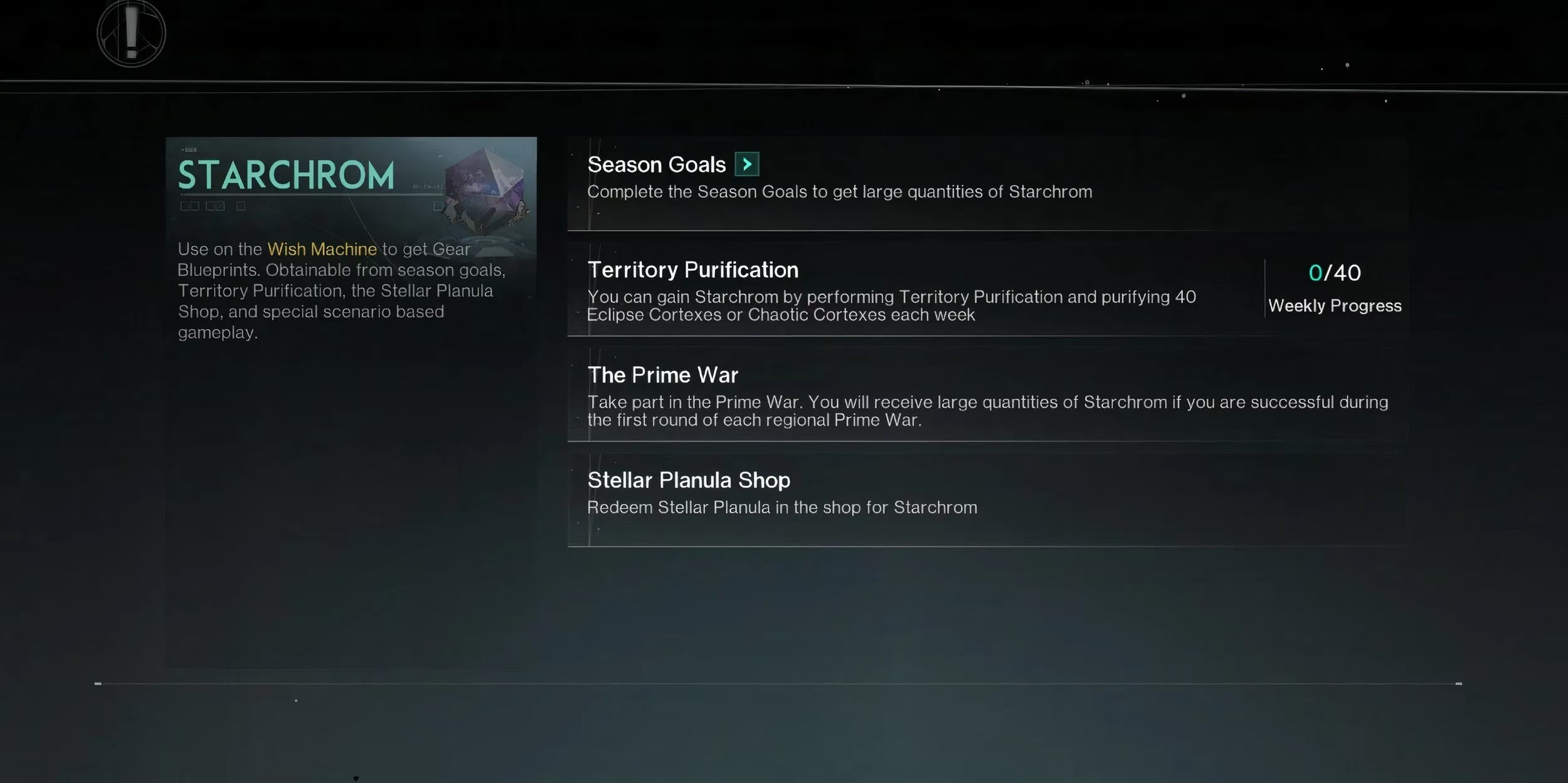
Every pull demanded Starchrom, the game’s premium currency that glittered like liquid twilight. Earning it became an obsession. The developers at Starry Studio had designed multiple pathways, and by 2026, the economy had stabilised into a predictable loop.
-
Task Journal Rewards: Pressing J brought up a list of daily and weekly objectives — eliminate 50 deviants, craft 10 medical kits, visit a landmark. Each completed task dribbled a modest amount of Starchrom into the inventory.
-
Event Participation: The Esc menu housed a rotating carousel of limited-time events. A survival race across the Chalk Peaks or a boss rush in the Sunken City would often reward lump sums hefty enough for a multi-pull.
-
Seasonal Milestones: Clicking Current Season in the top-right corner revealed a battle-pass-style track. Reaching certain tiers, often by simply surviving another week, showered patients with Starchrom.
Veterans learned to stack activities efficiently — complete three tasks during an event window and the payoff could hit 10,000 Starchrom in a single evening. That amount translated to two ten-pulls, or a fortnight of careful grinding for a free-to-play soul.
Pulling the Lever of Fate
Kai stood before the machine, 5,000 Starchrom burning in the digital vault. The interface was brutally simple:
| Option | Cost | Strategy |
|---|---|---|
| Draw 1× | 500 Starchrom | Good for testing luck or clearing a near-empty pool |
| Draw 10× | 5,000 Starchrom | Efficient when targeting specific blueprints |
With a deep breath, Kai selected the 10× pull. The screen dissolved into a bizarre minigame — a fluffy llama appeared, swaying gently, and a giant mallet swung into view. Whack the llama. Every veteran knew the secret: the target didn’t affect the reward, but missing the swing entirely was impossible anyway. Most players, Kai included, hit Skip Cutscene after the first few times. The animation faded, and ten glowing orbs shattered into items.
Luck dictated the outcome. Blueprints for assault rifles, rare armour pieces, or even cosmetic trinkets like glowing backpacks could spill out. The system, however, had a merciful guardian clause: any item drawn was immediately removed from the current pool. No duplicate blueprints, no wasted pulls. This anti-duplicate protection rewarded persistence, ensuring that every click of the Wish Machine brought a survivor closer to unlocking the entire collection.
A Survivor’s Companion Beyond 2026
Two years after its introduction, the Wish Machine remained the emotional heart of progression in Once Human. The developers had layered in seasonal pools that rotated with each major update, keeping the chase fresh. By late 2026, the community had turned the once-dreaded gacha mechanic into a ritual — streams hosted “Wish Machine Wednesdays,” veterans coached newcomers on efficient Starchrom farming, and the sound of a rare blueprint dropping was still enough to make a bunker full of survivors erupt in cheers.
Kai never forgot that first 10× pull in the dust-choked base. Among the haul sat a legendary sniper blueprint labelled Voidpiercer Mk III. It didn’t just change his loadout — it rewrote his story, letting him reclaim territory from the corruption and build a settlement that traders would actually visit. In a world where hope was the scarcest resource, the Wish Machine was the closest thing to a promise: keep surviving, keep earning, and eventually the prize pool would reward your stubbornness.
For anyone still wandering the Iron River, the advice was unchanged. Scout Greywater Camp, haul the machine home, and start chasing Starchrom. The llamas were waiting.
Industry insights are provided by Polygon, whose reporting on live-service game economies helps frame why Once Human’s Wish Machine feels like more than a simple gacha—its anti-duplicate pool design turns each Starchrom spend into steady progression, encouraging players to plan pulls around seasonal rotations while keeping the ritual of “one more 10×” psychologically rewarding even for free-to-play survivors.