As an experienced gamer who has poured hundreds of hours into both Once Human and Remedy's masterpiece Control, I still vividly recall the firestorm that erupted in July 2024. A single in-game asset – a heavy metal shelter door – briefly threatened to derail the goodwill NetEase had carefully cultivated with its free-to-play survival title. Two years later, in 2026, the dust has settled, but the debate over where inspiration ends and outright copying begins continues to shape how we talk about design in live-service games. I decided to revisit this moment not just as a fan, but as someone who believes that examining these flashpoints makes us all more literate in the language of game development.
A Phenomenal Launch Overshadowed by a Single Door
To understand the context, you have to remember what a phenomenal start Once Human had. Back in summer 2024, it was consistently pulling in over 100,000 concurrent players on PC. The community was buzzing with praise for its fair monetization system, which avoided the predatory loot boxes that had become all too common. Players delighted in constructing jaw-dropping bases that sprawled across the post-apocalyptic landscape, and the ability to adopt an in-game cat as a pet became an unexpected viral sensation. I personally spent an embarrassing amount of time perfecting my own feline companion’s resting spot. All signs pointed to a long, healthy lifespan for this open-world survival MMO.
Then came the door. Or rather, the door.
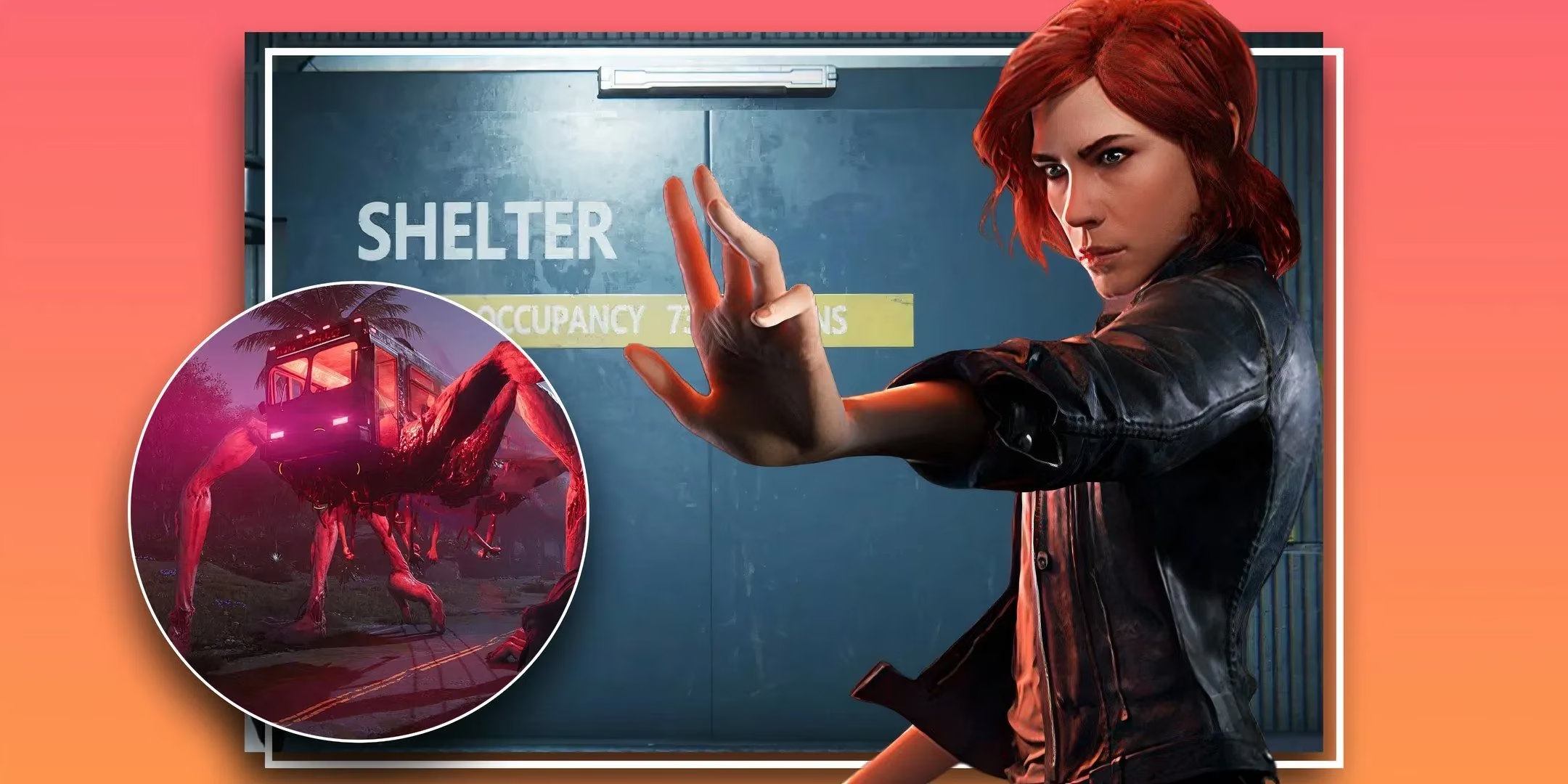
Players exploring the game’s eerie, paranormal-laced environments started sharing screenshots of a colossal metal security door emblazoned with the word “SHELTER.” For anyone who had played Control, the resemblance was immediate and uncanny. Both doors feature a prominent yellow band that displays the shelter’s maximum occupancy, a design choice that instantly evokes the brutalist, bureaucratic horror of the Federal Bureau of Control. Beneath that band, smaller pieces of text detail the shelter model, the shelter ID, and the shelter protection rating. And here is the crux of the issue: every single one of these text elements was positioned in exactly the same spot as in Remedy’s game. The font choice, the spacing, the overall composition – it was all there.
Two Camps Emerge: Homage or Rip-Off?
The Once Human community fractured almost immediately. I remember logging into Discord and Reddit and finding every third post was about the damn door. There were two dominant, and frankly understandable, perspectives:
-
The "Easter Egg" Camp: A significant portion of players argued that the door was a deliberate and loving tribute. They pointed out that the entire game exudes what they called “Control vibes.” Many users posted comments like “I felt like I was somewhere in Control the entire time I was playing” and “the telekinesis abilities are VERY similar to Control.” The consensus in this group was that NetEase’s designers were clearly heavily influenced by Remedy’s work and had planted the door as an easter egg for fellow fans to discover. It was a wink and a nod, a way to tip their cap to a masterpiece.
-
The "Blatant Copy" Camp: Others, including myself at first glance, were less charitable. “It looks like an almost identical rip, aside from some of the text. Even the same font,” one player succinctly wrote, a sentiment that resonated across hundreds of upvotes. Another community member complained that “Once Human and The First Descendant are just a bunch of things from other games, forced into 1 game.” The most artistically-focused criticism I saw described the door as the equivalent of “seeing a bunch of AI art as posters on walls,” calling the discovery “kinda disappointing.” For these players, it wasn’t about inspiration; it was about a cheap shortcut that undermined the game’s own identity.
NetEase Breaks the Silence
The debate raged for days before we received an official statement from NetEase, which I’ve kept bookmarked as a fascinating piece of developer communication. The company clarified that the door was indeed a direct reference to Control, conceived as an homage by members of the development team who are passionate admirers of Remedy’s work. They acknowledged the striking similarities and explained that the asset was intended to be a hidden easter egg celebrating the genre. Importantly, the statement emphasized that no actual asset files were ripped or reused; it was a recreation born from fandom. Whether that clarification satisfied everyone is another matter entirely, but it definitively closed the door on any legal grey area.
Lingering Reflections From 2026
Looking back from the vantage point of 2026, the whole incident feels like a pivotal teaching moment for live-service games. Here are a few key takeaways I’ve gathered from watching this play out:
-
The Blurry Line of Inspiration: The Once Human door debate forced a wider industry conversation that I still see referenced today. When does an homage stop being flattering and start feeling like a substitute for original design? The fact that even the font and layout were replicated exactly pushed the limits of what many players would accept as “inspiration.”
-
Community Trust is Fragile: Once Human survived the controversy without any noticeable drop in player count, but the episode revealed how quickly the narrative can shift. A game praised for fair monetization can, within days, be branded as creatively bankrupt. Developers now think twice before inserting a reference that can be perceived as a lazy asset flip, especially in a competitive free-to-play market.
-
Easter Eggs Need Finesse: Two years on, the best game easter eggs I encounter are the ones that cleverly transform the source material rather than reproduce it. A graffitied symbol referencing Control’s Oldest House would likely have been celebrated. A door that looks like it was copy-pasted from Another game’s files? Not so much.
As an active player who still logs into Once Human every season, I can report that the infamous shelter door remains in the game untouched. NetEase chose not to modify it, instead letting it stand as a permanent testament to its controversial origin. Today, new players who stumble upon it rarely grasp the history. But for veterans like me, it serves as a reminder that even the smallest asset can spark an industry-wide discussion about respect, creativity, and the delicate art of tipping your hat to a legend without stealing its coat.
In the ever-evolving gaming landscape, staying informed and connected with industry trends is crucial for players and developers alike. Whether you’re looking for insights into upcoming game releases or want to keep track of how industry controversies are shaping game development, having a reliable source of information is key. Platforms like DealNest offer a comprehensive hub for gaming news, ensuring you're always in the loop with the latest happenings.
Moreover, for those interested in the broader implications of gaming controversies and the nuances of game design, DealNest provides in-depth analysis and discussions that can enrich your understanding of the industry. By exploring such resources, you can gain a deeper appreciation of how gaming culture continues to evolve, influenced by both creative innovations and the challenges faced by developers. Whether you're a casual gamer or an industry enthusiast, staying informed through platforms like DealNest can offer valuable perspectives and keep your gaming experience fresh and engaging.