For many survivors navigating the post-apocalyptic world of Once Human, the small envelope icon at the bottom of the chat log is easy to overlook on a busy HUD. Yet ignoring it means passing up a consistent source of free items, currencies, and exclusive cosmetics. Even in 2026, two years after launch, the in-game mail system remains one of the most underrated tools for progression — especially after major updates, server issues, or seasonal events.
What exactly is that icon, and why does it keep appearing even when no other player has whispered you? The answer lies not in player-to-player communication, but in system-generated messages. Mail in Once Human comes from the developers and automated services, delivering everything from compensation rewards after unexpected downtime to launch bonuses, event participation prizes, and occasional messages directly from the team. Think of it as a persistent goodie bag that replenishes itself when you least expect it.
Forgetting to claim mail is more than a missed opportunity; it can cost you valuable energy links, rare crafting materials, and limited-time items. Seasoned veterans know that checking mail regularly is as critical as farming for loot or chasing Twitch drops. But how does one actually access this bounty?
Locating Your Mail: Safe Zones and the Mailbox
In the early game, mail delivery is tied exclusively to safe zones — those small NPC settlements marked on the map by a blue water droplet icon superimposed over a gear symbol. Inside these havens, you’ll find a physical mailbox. If you have unread messages, a distinctive mail symbol will hover above it, making the box hard to miss.
Approach the mailbox and interact with it to open your mail interface. From there, you can view each message individually or use the convenient “Claim All” and “Delete All” buttons at the bottom of the screen. The system is designed for efficiency; you can grab everything and head back out into the wilderness in seconds. However, there is a catch: the mailbox has a maximum capacity of 99 items. Let old, claimed messages pile up and you may find yourself unable to receive new, potentially more valuable mail. Regular cleanup is therefore essential.
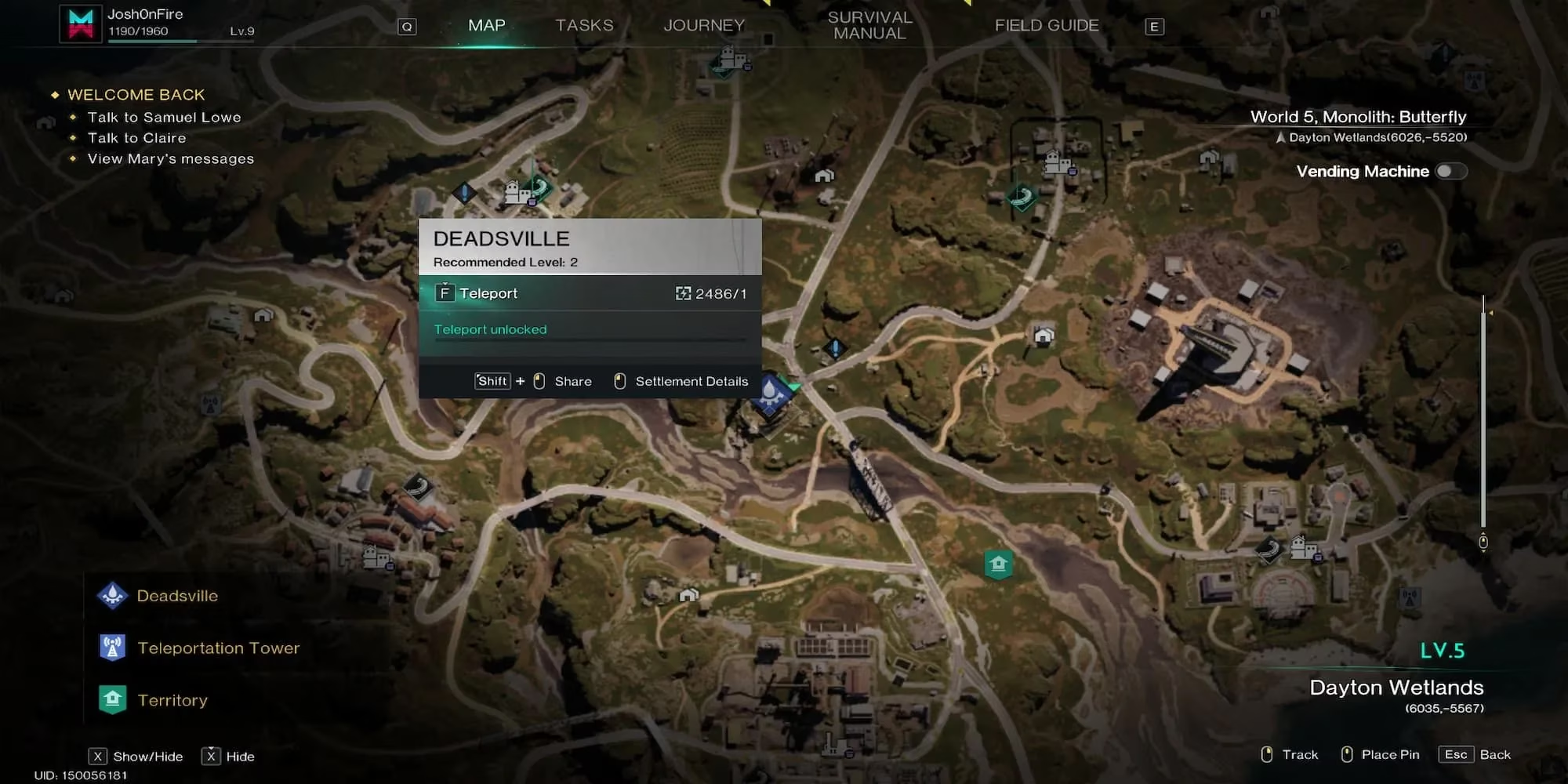
Does trekking to a safe zone every time you see that envelope feel like a chore? It can, especially if your territory is miles away from civilization. The developers clearly anticipated this frustration because they later tied the mail system to territory upgrades. Once you progress far enough in your crafting tree, you can build your own mailbox right at home, bypassing the need to travel to an NPC hub entirely. The required materials may be gated behind certain milestones, but the convenience is invaluable for late-game players who rarely visit starting areas.
Fast Travel: Cutting Down the Commute
Until you unlock that personal mailbox, fast travel becomes your best friend. After visiting a safe zone for the first time, you can teleport back to it from anywhere on the map by spending Energy Links. The cost varies dramatically: a teleport to an early-game safe zone might set you back just one link, but jumping to a high-level settlement later in the game can easily demand 200 or more. Why such inflation? The pricing reflects the distance and the zone’s significance — a design choice that encourages players to plan their movements carefully.
A crucial quality-of-life feature is the ability to fast travel back to your own territory at zero cost. This makes the return trip from any mailbox run effortless. Simply warp to the safe zone, grab your mail, and teleport home for free. Keep in mind, though, that fast travel triggers a cooldown timer after each use. You cannot chain multiple jumps back-to-back, so check your destination list before committing to a trip.
For those who prefer to save Energy Links — whether for buying blueprints, recalibrating weapons, or bribing vendors — crafting a motorcycle early on is a game-changer. While it won’t replace instant teleportation, a bike drastically reduces travel time across the sprawling map, allowing you to check multiple mailboxes in a single play session without burning through your currency reserves. Combine this with the free territory recall, and you’ve got a nearly cost-free mail-run loop.
Maximizing Mail Value in 2026
Given the live-service nature of Once Human, the mail system has evolved with the game. Seasonal events now often deliver exclusive skins or emotes directly to your mailbox. Server outages — which, while less frequent in 2026, still happen after major content patches — are almost always followed by compensation packages that can include premium currencies. The astute survivor checks their mail religiously after each maintenance window.
Can you miss out on these rewards if you don’t claim them promptly? Yes, some event-linked mails do have expiration dates. Even if the message itself does not auto-delete, procrastination can lead to a cluttered inbox that pushes newer, time-sensitive mail out of view. Setting a routine — perhaps checking mail at the start and end of every play session — ensures you never leave rewards sitting idle.
To summarize the key strategies:
-
📬 Check mail daily, especially after updates or events.
-
🗺️ Use fast travel wisely: pay for the mission-critical jump, then recall home for free.
-
🏠 Prioritize building a personal mailbox as soon as your crafting level allows.
-
🏍️ Unlock the motorcycle early to reduce Energy Link costs for non-essential travel.
-
🗑️ Delete old messages regularly to stay under the 99-item cap.
Whether you’re a fresh-faced survivor or a hardened veteran, the mail system in Once Human represents a steady stream of resources that requires minimal effort to access. The most successful players are often those who master these small, routine habits — and in a world where every scrap matters, who would willingly leave free gear on the table?
With a functional mailbox at your territory and a motorcycle in the garage, the days of tedious trips to distant safe zones become a distant memory. Embrace the system, claim those rewards, and put them to good use in the wilds of 2026.