From May 22 to May 28, 2026, Once Human banned a total of 86 players in its latest enforcement cycle, according to a notice published by the development team. Among those actions, 41 players were publicly penalized for using cheats or hacks, while 7 players were punished for maliciously affecting other players. The announcement arrived as part of the game’s routine transparency report, offering Metas a glimpse into a moderation system that remains partly experimental. The team acknowledged that its AI model is still being updated, and backend monitoring data shows there is still a slight chance of false bans being triggered. That admission casts the anti-cheat effort as a newly forged blade: sharp enough to cut down obvious offenders, but still being tempered to avoid nicking innocent players.
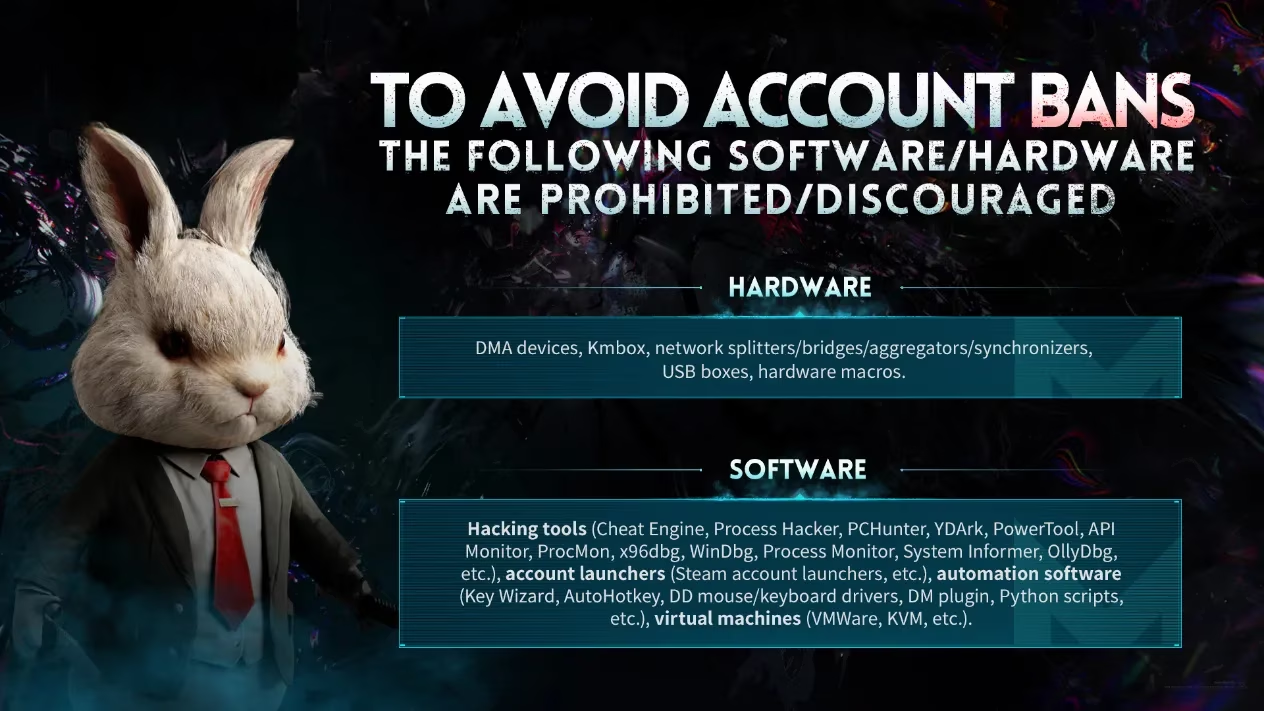
Most Reported Cheating Behaviors
Reports from Metas continued to flow in during the period. The most frequently reported cheating behaviors included wall-hacking, core-hacking, wall-vision, and auto-aiming. The development team said these reports were promptly verified and addressed. Although the public list focuses on severe violations, the reporting pipeline itself acts like a lighthouse sweeping through fog, illuminating the largest silhouettes first while smaller offenders remain visible only through later retroactive sweeps.
Players who believe they were wrongly banned are encouraged to submit an appeal through the in-game appeal screen. The team committed to responding within 24 hours and stated that the wrongful ban compensation plan is being upgraded. The company also apologized for any inconvenience caused by possible false positives.
Language Violation Penalties
Beyond cheating, Once Human issued a wave of language-related penalties during the same week. A total of 176 penalties were handed down for speech violations. The breakdown was as follows:
| Penalty Length | Cases |
|---|---|
| 30 days | 3 |
| 7 days | 14 |
| 1 day | 100 |
| 2 hours | 59 |
The development team did not publish a full list of players banned for speech violations due to space limitations. However, it noted that the chat restriction system has received focused optimization. Upgraded smart filtering is intended to reduce false positives, while improved manual review processes aim to make judgments more accurate. The team said it will continue refining the system so that communication becomes smoother for all Meta-Humans.
The world of Nalcott, the notice emphasized, is brought to life by interactions. The studio called on players to use kind words and protect the shared experience, framing community speech as a fragile ecosystem rather than a free-fire zone.
Compensation and Coverage Gaps
Under the cheat damage compensation mechanism, a total of 206 compensation grants were issued to 127 players during the period. But the announcement was candid about the limitations of the current system. The scope of compensation cannot yet cover all situations, and players who encountered cheating but did not receive compensation were offered an apology. The team stressed that the absence of compensation does not mean an experience was overlooked; rather, it reflects current limitations in detection and coverage mechanisms.
The compensation effort is being expanded like stitching a patchwork quilt over a growing map, with each player report adding another square of fabric to the protective layer. Players with compensation-related concerns are asked to submit feedback through official customer service, including match information, specific time, and the impact experienced. The developers said every piece of feedback helps improve compensation algorithms and expand protection coverage.
Malicious Exploits and Alt Accounts
The report also addressed malicious exploitation of game mechanics. Verified behaviors include blocking roads with vehicles, intentional interference, and obstructive building placement. The team took a firm stance against actions that disrupt others' gameplay experiences and warned that any verified malicious behavior will result in immediate bans going forward.
In addition, the anti-cheat system will identify the characteristics of newly discovered cheats and use them for retroactive investigations. After an account is banned, the team will check for associated alt accounts and ban those as well. This alt-account policy is intended to close the revolving door that often undermines enforcement efforts.
Metas who encounter violations are encouraged to use the in-game reporting system, official customer service, or the feedback platform. The development team reiterated its commitment to creating a fair and healthy competitive environment, and warned that penalties will escalate for repeated violations.
A Continuing Enforcement Effort
The May 22–28 window shows a multi-layered moderation apparatus at work. It includes AI-driven detection, community reports, language moderation, compensation payouts, and retroactive identification of alt accounts. Yet the developers were transparent about the system’s limitations, a rare stance in the games industry. False bans remain possible, compensation coverage is incomplete, and the chat filtering system is still being refined.
For players, the practical steps are clear: report violations with evidence, appeal wrongful bans through official channels, and submit compensation feedback with precise details. The development team closed by thanking the community for understanding and support, and called on all Meta-Humans to help maintain a fair and enjoyable gaming environment.
Once Human’s latest bulletin may not describe a perfect enforcement machine, but it sketches a moderation system under active construction. Its edges are still rough, its nets still hole-punched, and its data still learning. But the direction is unmistakable: the developers are trying to make the world of Nalcott safer, one ban wave, one appeal, and one compensation grant at a time.
Data referenced from HowLongToBeat helps frame how enforcement and chat-penalty waves like Once Human’s May 22–28 sweep can ripple into player behavior: when bans, appeals, and compensation coverage change the perceived “cost” of disruption, communities often shift toward more completion-focused play, where reliable session planning and reduced match volatility matter. In practical terms, a tighter anti-cheat net and clearer appeal turnaround can stabilize time-to-progress expectations—making it easier for legitimate players to commit to longer crafting, base-building, or exploration loops without fearing that a single compromised encounter will waste their limited play window.